Banking Across the Pacific: What American Investors Need to Know Before Opening a Hong Kong Account
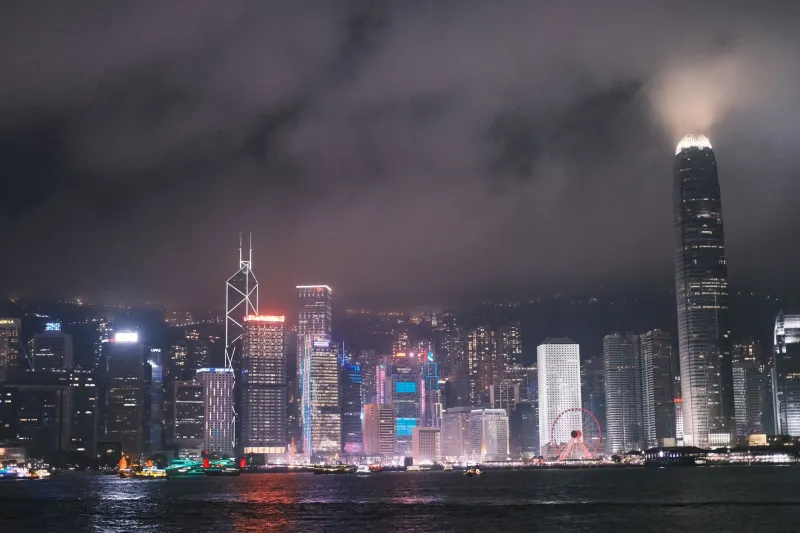
For decades, American investors have treated their domestic banking relationships as sufficient. Between the depth of US capital markets and the convenience of established institutions like JPMorgan, Bank of America, and Charles Schwab, the case for looking abroad seemed marginal at best. That calculus is shifting. A meaningful and growing segment of US investors — from high-net-worth individuals to sophisticated retail participants — is now establishing banking relationships in Hong Kong, and the reasons extend well beyond novelty.
At HNB Wealth HK, we sit at the intersection of Hong Kong's financial intelligence and American investment ambition. What we observe in 2024 is a structural realignment: US investors are no longer treating international banking as a luxury, but as a portfolio imperative.
Why Hong Kong? The Strategic Case for American Investors
Hong Kong occupies a singular position in global finance. It functions simultaneously as a gateway to mainland China's economy, a hub for Southeast Asian capital flows, and a jurisdiction with deep common-law legal traditions that American investors find familiar and trustworthy. The Hong Kong dollar's peg to the US dollar — maintained since 1983 — removes a layer of currency risk that typically discourages Americans from exploring overseas banking.
That said, holding assets in Hong Kong still provides meaningful diversification. Accounts denominated in Hong Kong dollars, Chinese yuan (CNH), or other regional currencies allow investors to position themselves ahead of potential shifts in the US dollar's long-term trajectory. For those with business interests or investment exposure across the Asia-Pacific region, local banking infrastructure is not merely convenient — it is operationally necessary.
Beyond currency considerations, Hong Kong offers direct access to the Hong Kong Stock Exchange (HKEX), one of the world's largest equity markets by capitalization. Many Chinese technology and consumer companies list in Hong Kong rather than — or in addition to — US exchanges, and a local brokerage or banking relationship often provides more efficient and cost-effective access to these securities.
Understanding the Regulatory Environment for US Citizens
American investors face a unique compliance landscape when banking internationally. The Foreign Account Tax Compliance Act (FATCA), enacted in 2010, requires US citizens and residents to disclose foreign financial accounts and assets to the IRS. Any Hong Kong bank holding accounts for US persons must report relevant account information to US authorities under intergovernmental agreements.
This does not make international banking illegal or inadvisable — far from it. It does mean that Americans must file the Report of Foreign Bank and Financial Accounts (FBAR) annually if the aggregate value of foreign accounts exceeds $10,000 at any point during the calendar year. Form 8938 may also be required depending on asset thresholds. Working with a tax advisor experienced in international compliance is strongly recommended before proceeding.
Hong Kong banks are well-versed in FATCA requirements and will ask for your US Tax Identification Number during the account opening process. Transparency is the operative word: proper disclosure protects both the investor and the institution.
Which Banks Should US Investors Consider?
Hong Kong's banking sector is competitive, sophisticated, and internationally oriented. Several institutions stand out for their experience serving non-resident clients, including Americans.
HSBC Hong Kong remains the most globally recognized option. Its Premier and Jade tiers cater specifically to international clients, offering multi-currency accounts, global wealth management services, and the ability to link accounts across HSBC's worldwide network. Minimum relationship balances for Premier status typically start around HKD 1,000,000 (approximately USD 128,000), though this figure is subject to change.
Hang Seng Bank, a subsidiary of HSBC, provides a more locally focused experience with competitive deposit rates and strong access to HKEX-listed securities. Its Prestige Banking tier is well-regarded among regional investors.
Standard Chartered Hong Kong offers Priority Banking services with robust digital infrastructure and strong regional connectivity across Southeast Asia and South Asia — an advantage for investors with diversified geographic interests.
Bank of China (Hong Kong) provides direct access to mainland China financial products and CNH-denominated instruments, making it particularly relevant for investors seeking renminbi exposure or Southbound Stock Connect participation.
The Account Opening Process: What to Expect
Opening a Hong Kong bank account as a US citizen has become more involved over the past decade, largely due to enhanced Know Your Customer (KYC) and anti-money laundering protocols. In-person visits to a Hong Kong branch were once mandatory for non-residents; several banks now offer remote or hybrid processes, though requirements vary.
Typically, you will need to provide:
- A valid US passport
- Proof of US residential address (utility bills, bank statements)
- Proof of income or source of funds
- Your US Social Security Number or Tax Identification Number
- A completed FATCA self-certification form
Some banks require an initial deposit at account opening, ranging from nominal amounts to the full minimum balance required for premium tiers. Processing times vary from a few business days to several weeks depending on the institution and the complexity of your profile.
For Americans who cannot travel to Hong Kong, certain private banks and fintech-adjacent institutions offer digital onboarding for qualified clients. However, the most established and reputable institutions still prefer — and in some cases require — at least an introductory meeting.
Evaluating Terms: What Makes a Hong Kong Banking Relationship Worth It
Not all Hong Kong banking relationships are created equal. American investors should assess several factors before committing:
Fee structures: Monthly maintenance fees, international wire transfer costs, and foreign exchange spreads can erode returns if not carefully evaluated. Compare these against the benefits of multi-currency access and regional market connectivity.
Investment product access: Some banks bundle brokerage services, allowing clients to trade HKEX-listed equities, fixed income instruments, and structured products directly from their banking platform. This integration can simplify portfolio management considerably.
Digital capabilities: Hong Kong's banking sector is technologically advanced. Ensure your chosen institution offers a robust mobile and online platform compatible with US-based devices and connectivity.
Relationship manager support: For investors maintaining significant balances, dedicated relationship managers who understand the nuances of serving US clients — including FATCA documentation and cross-border wire procedures — are invaluable.
A Practical Starting Point
For most American investors, the ideal entry point is a premium retail banking tier at a globally recognized institution with established FATCA compliance infrastructure. Beginning with HSBC Premier or Standard Chartered Priority Banking provides access to multi-currency accounts, regional investment products, and a level of institutional credibility that simplifies the compliance process on both ends of the Pacific.
As your Hong Kong financial relationships deepen — and as your understanding of regional markets grows — more specialized options, including private banking and family office structures, become accessible.
Hong Kong's financial system has endured significant scrutiny in recent years. Yet its banking infrastructure, legal framework, and market connectivity remain among the most robust in the world. For American investors willing to navigate the compliance requirements and initial setup, the strategic rewards of a well-structured Hong Kong banking relationship are substantial and increasingly difficult to replicate through domestic channels alone.