Why America's Wealthiest Families Are Quietly Planting Flags in Hong Kong
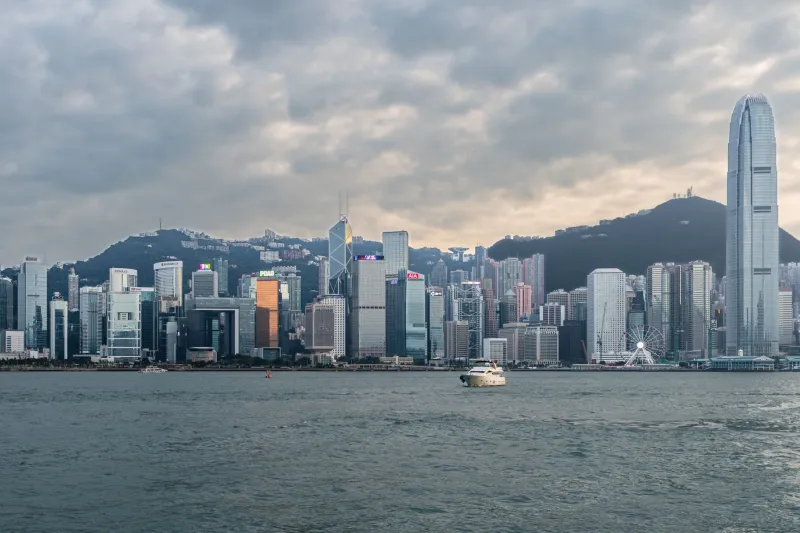
Wealth, at sufficient scale, behaves differently than ordinary capital. It does not merely seek returns — it seeks resilience, optionality, and the capacity to endure across generations and geopolitical cycles. This is the frame through which one must understand a development that has been unfolding gradually, largely outside mainstream financial media: a meaningful cohort of ultra-high-net-worth American families is restructuring portions of their assets in Hong Kong.
This is not a mass exodus. It is not driven by anti-American sentiment or a wholesale rejection of US markets. It is, rather, a sophisticated diversification strategy — one that reflects both the anxieties and the ambitions of families managing wealth in the $100 million to multi-billion-dollar range. At HNB Wealth HK, we have observed this trend closely, and we believe it warrants honest, rigorous analysis rather than either breathless celebration or reflexive dismissal.
The Geopolitical Hedge: Diversifying Across Power Centers
The foundational logic driving ultra-wealthy American families toward Hong Kong is geopolitical diversification. The post-World War II global order — characterized by US dollar hegemony, open multilateral trade, and relatively predictable international institutions — is under more structural pressure than at any point in recent memory. Whether one views this pressure as temporary turbulence or a genuine civilizational inflection point, the prudent response for large pools of capital is the same: distribute exposure across multiple jurisdictions and power centers.
Hong Kong occupies a unique position in this calculus. It is simultaneously part of China — the world's second-largest economy and the most credible long-term challenger to US economic primacy — and a jurisdiction with common-law legal traditions, an independent judiciary (within defined limits), and financial infrastructure built to international standards. For American families seeking exposure to the China growth story without the opacity of direct mainland investment, Hong Kong has historically represented the most accessible and legally familiar entry point.
The argument is not that Hong Kong is risk-free — we will address that directly — but that a world in which the US and China both remain major economic powers is a world in which having financial relationships on both sides of the Pacific has structural value.
Access to Asian Private Markets: The Opportunity Most Americans Miss
Beyond geopolitical hedging, Hong Kong offers something that US-domiciled family offices increasingly struggle to access efficiently: deal flow in Asian private markets.
Southeast Asia's venture capital and private equity ecosystem has matured dramatically over the past decade. Indonesia, Vietnam, the Philippines, and Thailand are producing technology companies, consumer brands, and infrastructure assets that represent genuine long-term growth opportunities — but accessing them from New York or San Francisco requires either specialized fund relationships or a local presence. Hong Kong, as the region's premier financial hub, is where deal flow aggregates, where fund managers raise capital, and where co-investment opportunities circulate.
Family offices and private wealth structures established in Hong Kong gain proximity to this ecosystem in ways that are difficult to replicate remotely. Relationships with local private equity managers, access to pre-IPO opportunities on the HKEX, and participation in regional venture rounds all become more operationally feasible when you have a genuine footprint in the city.
For ultra-wealthy families whose domestic portfolios are already fully allocated across US private equity and venture capital, Hong Kong-based private market access represents genuine incremental diversification — not just geographic, but sectoral and developmental.
Structural Flexibility: What Hong Kong Offers That Western Jurisdictions Do Not
The regulatory architecture of wealth management in Hong Kong provides flexibility that American families — accustomed to the constraints of US tax law and securities regulation — often find striking.
Hong Kong imposes no capital gains tax, no dividend withholding tax on locally sourced dividends, and no inheritance tax. For US citizens, these advantages are partially offset by America's worldwide taxation system, which taxes citizens on global income regardless of residence. However, thoughtful structuring — often involving trusts, holding companies, or family limited partnerships established in jurisdictions recognized by both US and Hong Kong law — can create meaningful tax efficiency for the non-US portions of a family's wealth or for family members who are not US persons.
This is an area where professional guidance is not optional — it is essential. The intersection of US tax law, FATCA, the Foreign Investment in Real Property Tax Act (FIRPTA), and Hong Kong's regulatory framework is genuinely complex. Families operating without specialized legal and tax counsel risk creating structures that generate compliance problems rather than solving them. The families doing this successfully are not cutting corners; they are engaging the best international tax and legal talent available.
The Honest Risk Assessment
Any analysis of Hong Kong as a wealth destination that omits a frank discussion of its risks would be incomplete and, frankly, irresponsible. The events of 2019 and 2020 — the social unrest, the implementation of the National Security Law, and the subsequent changes to Hong Kong's political and civil landscape — fundamentally altered the city's risk profile in ways that cannot be wished away.
The most significant concern for US investors is legal and political risk. Hong Kong's common-law judiciary, while still largely functional for commercial matters, operates within a political environment that has changed materially. The degree to which Hong Kong's courts will remain fully independent arbiters of commercial disputes over the long term is a question that serious investors must grapple with honestly, not dismiss.
There is also reputational and regulatory risk on the US side. Depending on the nature of the assets and structures involved, US government agencies — from the Treasury's Office of Foreign Assets Control (OFAC) to the Securities and Exchange Commission — may scrutinize Hong Kong-based financial arrangements, particularly those with meaningful mainland Chinese counterparty exposure.
Geopolitical deterioration between the US and China represents a tail risk that, while not the base case, cannot be assigned a trivially low probability. Families establishing Hong Kong-based structures should stress-test them against scenarios involving sanctions, capital controls, or restrictions on cross-border financial flows.
Who Is Actually Doing This — and How
The families making these moves are not impulsive. They are, almost without exception, working through established private banks — HSBC Private Banking, UBS, Goldman Sachs Private Wealth Management, and a handful of regional institutions with strong track records serving international clients. They are establishing Hong Kong-based family offices or sub-offices of existing US family office structures, often staffed with local professionals who understand both the regional opportunity landscape and the compliance requirements of serving US persons.
Investment allocations to Hong Kong and the broader Asia-Pacific region typically represent 10% to 25% of total portfolio value for these families — meaningful enough to provide genuine diversification, modest enough to limit downside if the thesis proves incorrect or conditions deteriorate.
The structures themselves vary: some families use Hong Kong-registered holding companies to house regional investments; others establish discretionary trusts with Hong Kong-based trustees; still others simply maintain private banking relationships and co-investment accounts without elaborate legal architecture.
What This Trend Signals
The movement of ultra-wealthy American capital toward Hong Kong is not a repudiation of the United States. It is, rather, a recognition that the geography of global wealth creation is shifting, and that families with the resources and sophistication to participate in that shift have both the opportunity and the obligation to do so thoughtfully.
Hong Kong's role in this story is not guaranteed. Its future as a global wealth hub depends on political decisions made in Beijing and Hong Kong, on the trajectory of US-China relations, and on whether the city's financial infrastructure continues to function with the transparency and rule of law that international capital requires. These are genuinely open questions.
What is not open to question is the strategic logic of geographic diversification at the level of ultra-high-net-worth wealth management. The families planting flags in Hong Kong today are not making a bet on any single outcome. They are buying optionality — the capacity to participate in Asia's growth, hedge against Western-centric risks, and position their wealth to endure across whatever global order emerges in the decades ahead.