Alpha at the Margins: How US Hedge Funds Are Finding Edge in Hong Kong's Equity Market Architecture
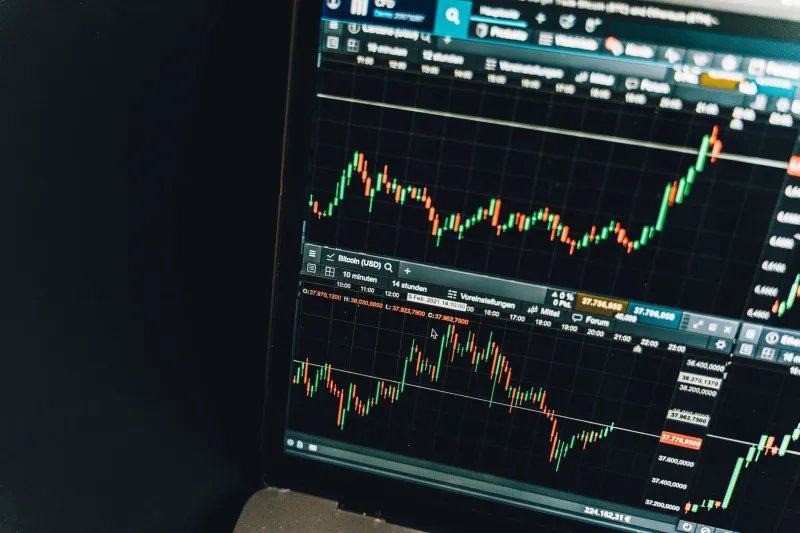
In quantitative finance, the most valuable territory is typically the least crowded. As US equity markets have absorbed decades of algorithmic sophistication—with hundreds of firms deploying overlapping strategies against the same data streams—the marginal return to incremental cleverness has compressed toward zero in many well-trodden areas. The arms race in American equities has become extraordinarily expensive to compete in and extraordinarily difficult to win.
This dynamic is pushing a segment of American hedge fund capital toward markets where the analytical infrastructure is less developed, the participant mix is less homogenous, and the structural features of the market itself create opportunities that systematic strategies can exploit. Hong Kong's equity and derivatives markets, accessed through the Hong Kong Exchanges and Clearing platform, have emerged as a meaningful destination for this search.
The reasons are specific, layered, and—at least for now—not widely appreciated outside the community of practitioners already operating there.
The Participant Mix That Creates Opportunity
Any discussion of market microstructure inefficiency begins with a question about who is on the other side of the trade. In the most efficient markets, the participant pool is dominated by sophisticated, well-capitalized actors with fast information processing and low transaction costs. In less efficient markets, the mix includes a larger proportion of participants whose behavior is driven by factors other than pure price discovery—retail investors acting on sentiment, institutional mandates that require mechanical rebalancing, or cross-border flows responding to macro factors that have limited relationship to individual security valuations.
Hong Kong's equity market reflects a participant structure that differs meaningfully from the US. Retail participation, while not as dominant as in some mainland Chinese markets, remains a structurally larger component of daily volume than in comparable US equity segments. The southbound flows through Stock Connect—mainland Chinese investors accessing Hong Kong-listed equities through the cross-border trading link—introduce a category of participant whose behavior is influenced by a distinct set of informational inputs, regulatory constraints, and currency considerations.
For quantitative strategies designed to identify and trade against predictable behavioral patterns in order flow, this mix offers a richer set of signals than a market populated almost exclusively by institutional participants running similar optimization frameworks.
Cross-Listing Arbitrage: The AH Premium and Its Variations
Among the structural inefficiencies that attract the most systematic attention is the persistent pricing divergence between mainland Chinese companies listed simultaneously on the Shanghai or Shenzhen exchanges (A-shares) and on the Hong Kong exchange (H-shares). This divergence—commonly referred to as the AH premium—reflects the partial segmentation between the two markets despite the existence of Stock Connect.
A-shares have historically traded at a premium to their H-share equivalents for the same underlying company, a phenomenon driven by restricted cross-border capital flows, differing investor bases, and distinct liquidity profiles. The premium is not constant—it fluctuates with market sentiment, policy signals, and the relative appetite of mainland versus international investors—and that variation creates trading opportunities for strategies capable of modeling its dynamics.
American quant funds with experience trading cross-listed equities and ADR arbitrage in US markets have found that the analytical frameworks developed in those contexts translate, with appropriate modification, to the AH premium environment. The key differences lie in the constraints: Stock Connect imposes daily quota limits on northbound and southbound flows, creating friction that prevents instantaneous arbitrage and extends the duration over which pricing divergences can persist.
For strategies operating at lower frequencies than pure high-frequency arbitrage, that friction is not an obstacle—it is the source of the opportunity.
Order Flow Dynamics on HKEX: Less Crowded, More Legible
Beyond the AH premium, practitioners describe Hong Kong's order flow data as offering a signal environment that is, in certain respects, less degraded by the presence of competing analytical frameworks than comparable US data.
In US equity markets, the volume of sophisticated participants processing Level 2 order book data, trade-by-trade tick data, and options flow in real time is enormous. The informational content of any given data stream has been extensively mined, and strategies built on those signals face intense competition that erodes their efficacy rapidly.
Hong Kong's derivatives market—particularly the Hang Seng Index futures and options complex, and the single-stock options market—has attracted less systematic attention from US-based quant funds, in part because building the infrastructure to trade it requires meaningful investment and regional expertise. The options market, in particular, exhibits pricing dynamics that practitioners describe as reflecting a somewhat less sophisticated options-writing community than the US market, creating episodic mispricings in implied volatility surfaces that disciplined strategies can exploit.
"The vol surface in Hong Kong single-stock options is not as tightly arbitraged as what you see in the US," observed one quantitative portfolio manager at a New York-based fund with a Hong Kong trading desk. "There are moments where the skew or the term structure reflects flows rather than fair value in a way that creates clear opportunity for a well-calibrated model."
Regulatory Asymmetries and Their Practical Implications
The regulatory architecture governing trading in Hong Kong differs from the US framework in ways that create both opportunities and risks for American participants.
Hong Kong's Securities and Futures Commission operates with a framework that, in certain respects, imposes different constraints on short-selling, position disclosure, and derivatives trading than the SEC and CFTC do in the US. Short-selling in Hong Kong is restricted to a designated list of securities—the approved short-selling list—which limits the universe of stocks that can be shorted and concentrates short interest in a narrower set of names. For strategies that rely on short positions to hedge factor exposure or express negative views, this constraint requires adaptation.
On the other hand, the disclosure thresholds for substantial shareholding positions differ from US rules, creating a different information environment around large position accumulation and disposal. Market participants who understand these disclosure dynamics can draw inferences from public filings that would not be available in an equivalent US context.
The absence of a pattern day trader rule—a US-specific regulation that constrains retail traders who make more than three day trades in a five-day period—is largely irrelevant to institutional participants but reflects the broader point that Hong Kong's regulatory framework was not designed around the same assumptions as the US system, and those differences have practical consequences for strategy design.
Is the Edge Durable?
The honest answer to the durability question is: partially, and for a limited window.
The structural features of Hong Kong's market—the participant mix, the AH premium mechanics, the derivatives market maturity—are not going to transform overnight into a replica of the US equity ecosystem. The regulatory, capital flow, and cultural factors that sustain these features operate on timescales of years, not months.
But the entry of more US quant capital into the HKEX ecosystem is itself a force that will, over time, erode the inefficiencies that attracted it. This is the familiar dynamic of any alpha source: the act of exploiting it reduces its availability. Funds that have already built infrastructure, developed regional expertise, and accumulated the proprietary data necessary to model Hong Kong-specific dynamics are in a structurally advantaged position relative to those still evaluating the opportunity from the outside.
For American hedge funds with the operational capacity to establish a genuine presence in Hong Kong—not merely a token allocation but a dedicated team with regional knowledge and purpose-built systems—the window for capturing meaningful structural alpha remains open. The question is how long that window stays open once the broader community arrives at the same conclusion.