Beyond the S&P: How Affluent American Families Are Using Hong Kong Real Estate to Offset Concentrated Equity Risk
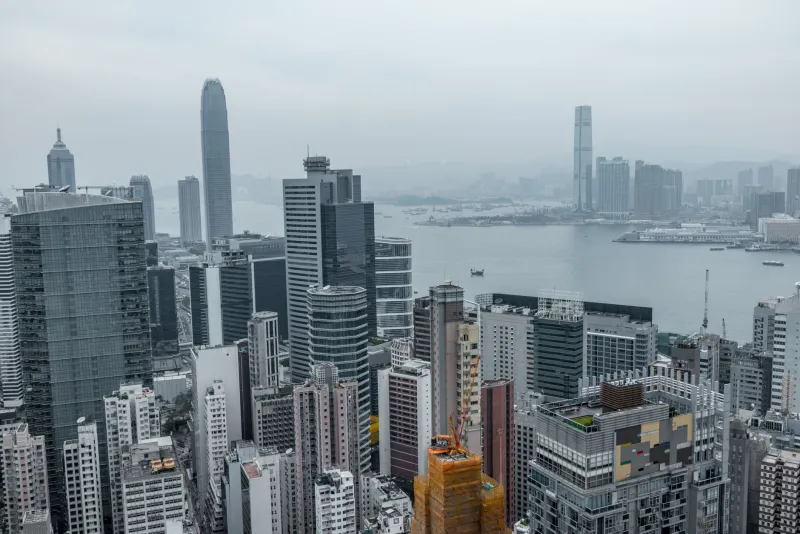
For the better part of the last decade, concentration risk has been the quiet engine behind extraordinary American wealth creation. Families who held large, undiversified positions in Apple, Nvidia, or Meta have watched those bets pay off in ways that diversified portfolios simply could not match. But what worked brilliantly in a prolonged bull market now presents a structural vulnerability—one that a growing number of sophisticated families are choosing to address not through US-based alternatives, but through a market roughly 8,000 miles away.
Hong Kong's real estate sector, long a cornerstone of generational wealth for Asia-Pacific families, is increasingly entering the strategic calculus of American wealth managers. The reasons extend well beyond simple geographic diversification. They touch on currency dynamics, acquisition efficiency, entity structuring, and a legal framework that American investors find far more navigable than its mainland Chinese counterpart.
The Concentration Problem in Plain Terms
Consider a family whose net worth is anchored in a single technology holding—say, a co-founder position or a large restricted stock unit grant from a decade of employment at a major Silicon Valley firm. On paper, the wealth is substantial. In practice, it is fragile. A 30% correction in a single name, or a sector-wide repricing triggered by interest rate shifts or regulatory scrutiny, can erase years of compounding in a matter of weeks.
Traditional diversification strategies—selling into a diversified mutual fund, deploying into fixed income, or utilizing exchange funds—each carry their own frictions: tax recognition events, lock-up constraints, or the simple reality that US equities, in aggregate, remain highly correlated during periods of stress. What many families are now seeking is a genuinely non-correlated asset class, denominated in a different currency, governed by a different legal system, and responsive to a different set of macroeconomic drivers.
Hong Kong real estate, structured thoughtfully, can satisfy each of those requirements.
Why Hong Kong, and Not Simply Any International Market
The instinct among many American investors is to default to European real estate—London, Paris, or the Swiss Alps—when seeking offshore property exposure. These markets are familiar, politically stable, and well-covered by English-language financial media. But they carry their own concentration risks: exposure to euro-zone monetary policy, relatively high transaction costs, and in several jurisdictions, increasingly punitive foreign ownership taxes.
Hong Kong presents a distinct profile. The city operates under common law principles inherited from its British administrative history, meaning that property rights, contract enforcement, and corporate governance frameworks are legible to American attorneys and advisors. The Hong Kong dollar's peg to the US dollar eliminates currency volatility at the asset level—though it does introduce nuanced exposure to US Federal Reserve policy, which sophisticated investors can model and manage.
Perhaps most significantly, Hong Kong sits at the intersection of Asian capital flows without requiring direct exposure to mainland China's regulatory environment. Investors who are wary of the opacity, capital controls, and evolving legal landscape of the People's Republic can access Asia-Pacific real estate dynamics through Hong Kong's separate legal and financial system—a distinction that carries real weight in both risk management and compliance conversations.
Acquisition Mechanics: The Role of Hong Kong Holding Entities
One of the more technically nuanced aspects of this strategy involves how the property is actually held. Purchasing Hong Kong real estate directly as a foreign individual is legally permissible, but it is rarely the optimal structure for an ultra-high-net-worth American family.
Many families, guided by Hong Kong-based legal counsel and cross-border tax advisors, acquire property through a Hong Kong private limited company. This structure offers several advantages. First, it separates the asset from the family's personal balance sheet, providing a layer of liability insulation. Second, it facilitates wealth transfer: shares in a Hong Kong holding company can be gifted or bequeathed to heirs without triggering a direct property transfer, which in many jurisdictions would reset stamp duty obligations.
Hong Kong imposes no inheritance tax and no capital gains tax on property appreciation—a framework that stands in sharp contrast to the US estate tax regime, which can claim up to 40% of taxable estates above the federal exemption threshold. For families engaged in multi-generational wealth planning, the ability to hold appreciating real estate in a structure that sidesteps both jurisdictions' most punitive transfer taxes is not a minor footnote. It is a foundational planning consideration.
It is worth noting, however, that American families must navigate FBAR and FATCA reporting requirements for foreign-held entities and accounts. The strategy is not a mechanism for tax evasion—it is a legitimate structure that rewards those who engage qualified cross-border advisors from the outset.
Mortgage Structures and Leverage Efficiency
Hong Kong's banking sector, home to some of the world's most sophisticated private banks, offers mortgage products that differ meaningfully from what American borrowers typically encounter. Loan-to-value ratios for foreign purchasers have tightened in recent years under Hong Kong Monetary Authority guidelines, but private banking relationships can unlock more flexible financing terms for verified high-net-worth clients.
For American families deploying this strategy, the mortgage is not merely a financing tool—it is a mechanism for preserving liquidity. Rather than liquidating a concentrated equity position (and recognizing a taxable gain in the process), the family pledges other assets as collateral, borrows against them, and deploys that capital into Hong Kong property. The equity position remains intact. The concentration risk is partially offset by the new asset. And the family retains optionality to unwind either position as circumstances evolve.
This kind of liquidity-preserving leverage is a hallmark of how private banking clients in Hong Kong have managed wealth for generations. American families are now beginning to access the same toolkit.
Commercial vs. Residential: Calibrating the Risk Profile
The choice between residential and commercial property in Hong Kong carries strategic implications that go beyond yield. Residential property in established districts—Mid-Levels, The Peak, Repulse Bay—has historically demonstrated low volatility relative to its price level, driven by persistent supply constraints and deep demand from regional wealth. It functions, in portfolio terms, as a low-beta store of value.
Commercial real estate—Grade A office space in Central, or retail assets in prime Kowloon corridors—offers higher yield potential but introduces exposure to Hong Kong's economic cycle, which is more directly tied to regional trade flows and financial sector activity. For a family whose primary objective is de-risking a concentrated US tech position, the lower-volatility residential exposure is typically the more appropriate anchor. Commercial property can serve as a secondary allocation for families with longer horizons and higher risk tolerance.
A Strategy That Rewards Preparation
It would be a mistake to approach Hong Kong real estate as a simple transaction. The families executing this strategy most effectively are those who invest in the advisory infrastructure first: engaging a Hong Kong-licensed real estate attorney, a Big Four or equivalent cross-border tax advisor familiar with both US and Hong Kong regimes, and a private bank with genuine Asia-Pacific origination capabilities.
The mechanics are manageable. The legal framework is accessible. And the strategic logic—using a non-correlated, tax-efficient, hard asset in a separate legal jurisdiction to counterbalance a volatile, concentrated US equity position—is sound.
For American families sitting on significant unrealized gains and wondering how to protect what they have built, Hong Kong's real estate market may represent one of the most underutilized tools in the global wealth management arsenal.