Asia First: Why Venture-Backed American Founders Are Choosing Hong Kong's Capital Markets Over NASDAQ
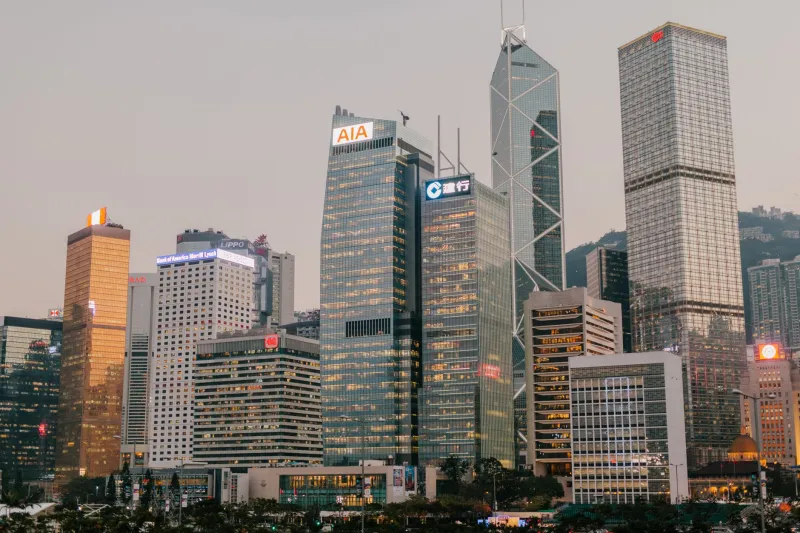
For decades, the American founder's journey followed a predictable arc: raise venture capital, scale domestically, and eventually ring the bell on Wall Street. NASDAQ was the destination. Everything else was a detour. That script is being rewritten.
A growing number of venture-backed companies with American founders or significant US operations are now treating Hong Kong's Stock Exchange — the HKEX — as a primary listing venue, not a secondary one. Some are arriving there before any US debut. Others are choosing it instead. The motivations are financial, structural, and increasingly strategic, and they deserve serious analysis from any investor who tracks where sophisticated capital is moving.
The Architecture of a Hong Kong Listing
The HKEX operates under a framework that differs from US exchanges in several meaningful ways. Listing requirements, while rigorous, are structured to accommodate companies with significant Asia-Pacific revenue exposure, dual-class share structures, and — since regulatory reforms introduced in 2018 and expanded in subsequent years — pre-revenue biotech and technology companies that would struggle to meet traditional profitability thresholds.
For American founders who have already built a commercial footprint in Asia, this creates an opening that simply does not exist in the same form on US exchanges. The HKEX's Chapter 18A listing rules, designed explicitly for pre-profit biotech companies, and its Chapter 19C provisions for secondary listings of overseas issuers, give founders more pathways to public capital than most realize.
Critically, the investor base is different. Hong Kong's institutional market connects issuers directly to sovereign wealth funds, family offices, and asset managers across mainland China, Southeast Asia, the Gulf Cooperation Council, and beyond. These are capital pools that rarely participate in a standard NASDAQ IPO roadshow — and they often bring longer investment horizons alongside them.
Earlier Liquidity, Different Timing
One of the most underappreciated advantages for founders is timing. The HKEX operates in a different market cycle than US exchanges. When US equity markets are navigating rate uncertainty or domestic political turbulence — conditions that frequently suppress IPO windows — Asian institutional appetite may remain constructive, particularly for companies with demonstrated regional revenue.
This counter-cyclical dynamic has proven valuable in practice. During periods when the US IPO market effectively closed between 2022 and 2023, several companies with dual operational bases quietly advanced Hong Kong listing preparations. The ability to access public capital on a different timeline than the US market provides founders with genuine optionality — and optionality, in capital markets, has measurable value.
For investors holding pre-IPO positions in such companies, this dynamic matters considerably. A Hong Kong listing may deliver liquidity windows that a delayed or cancelled US offering would not.
Dual-Listing Strategy and the Valuation Question
Perhaps the most sophisticated play being executed by well-advised founders is the sequential dual-listing: debut in Hong Kong, establish a trading history and institutional shareholder base, then pursue a US listing — or a secondary listing on a US exchange — from a position of demonstrated public market credibility.
This sequence inverts the traditional model, and it does so deliberately. A company that arrives on NASDAQ with an established Hong Kong listing, Asian institutional backing, and a track record of public market governance carries a different profile than a first-time issuer emerging from private markets. Underwriters, analysts, and index inclusion committees all respond to that difference.
Valuation arbitrage is also a real consideration, though it cuts in different directions depending on sector. Technology and consumer companies with China-adjacent revenue have historically commanded valuation multiples on the HKEX that reflected the strategic premium Asian investors attach to regional growth exposure. Healthcare and biotech companies have similarly found receptive audiences among Hong Kong-based funds with deep sector expertise.
Case Contexts: Where the Strategy Has Taken Hold
Without naming companies whose situations remain in flux, it is instructive to examine the categories where this approach has gained traction.
In life sciences, American companies conducting clinical trials with Asia-Pacific patient populations have found that Hong Kong listings accelerate both capital access and regulatory relationships. The HKEX's biotech framework allows these companies to raise public capital before US FDA milestones are achieved — a timeline that changes the entire fundraising calculus for founders and their early-stage investors.
In fintech and payments infrastructure, companies that built dual-market compliance frameworks — capable of operating under both US and Hong Kong regulatory regimes — discovered that their structural sophistication was rewarded by Hong Kong institutional investors who understood the complexity being managed. The same sophistication that creates operational overhead in the US becomes a signal of quality in Hong Kong's institutional market.
In consumer and e-commerce, founders with meaningful Southeast Asian or Greater China customer bases have found that Hong Kong listings allow them to tell a regional growth story to an audience that is positioned to evaluate it with genuine expertise, rather than treating Asia as an undifferentiated emerging market footnote.
Regulatory Arbitrage and What It Actually Means
The phrase "regulatory arbitrage" is sometimes used loosely, but in this context it has a precise meaning. Hong Kong maintains a common law legal system, robust securities regulation under the Securities and Futures Commission, and disclosure requirements that international institutional investors recognize and respect. It is not a light-touch jurisdiction.
What it offers that the US does not is a different set of rules — on dual-class share structures, on pre-revenue listing eligibility, on the treatment of variable interest entity structures for companies with mainland China operations, and on the pace of regulatory review. For founders navigating specific structural constraints, these differences are not loopholes. They are legitimate design features of a mature capital market built to serve a different regional context.
American founders who have taken the time to understand these differences — typically with the assistance of advisors who operate across both jurisdictions — are making informed decisions about where their companies' public market stories will be best received and best valued.
What Pre-IPO Investors Should Monitor
For American investors holding pre-IPO positions in companies that may pursue Hong Kong listings, several factors warrant attention. Lock-up provisions, currency denomination of proceeds, and the mechanics of secondary market liquidity on the HKEX all differ from US norms and require specific diligence.
The Hong Kong dollar's peg to the US dollar removes currency risk from the headline liquidity event itself, though ongoing trading in HKD introduces considerations for investors managing USD-denominated portfolios. The HKEX's trading hours, settlement conventions, and the role of the Stock Connect program — which links Hong Kong markets to mainland Chinese investors — all shape the secondary market dynamics that determine what post-IPO liquidity actually looks like.
Founders and their cap tables who approach these questions with preparation, rather than discovering them mid-process, consistently report better outcomes. The mechanics are learnable. The advantage belongs to those who learn them first.
The Broader Signal
The movement of American founders toward Hong Kong's capital markets is not a rejection of US markets. It is an expansion of the available toolkit — and a recognition that the geography of global capital has shifted in ways that Wall Street's conventional wisdom has been slow to absorb.
For investors who position themselves to understand both markets, the opportunity is not simply to observe this shift. It is to benefit from it.